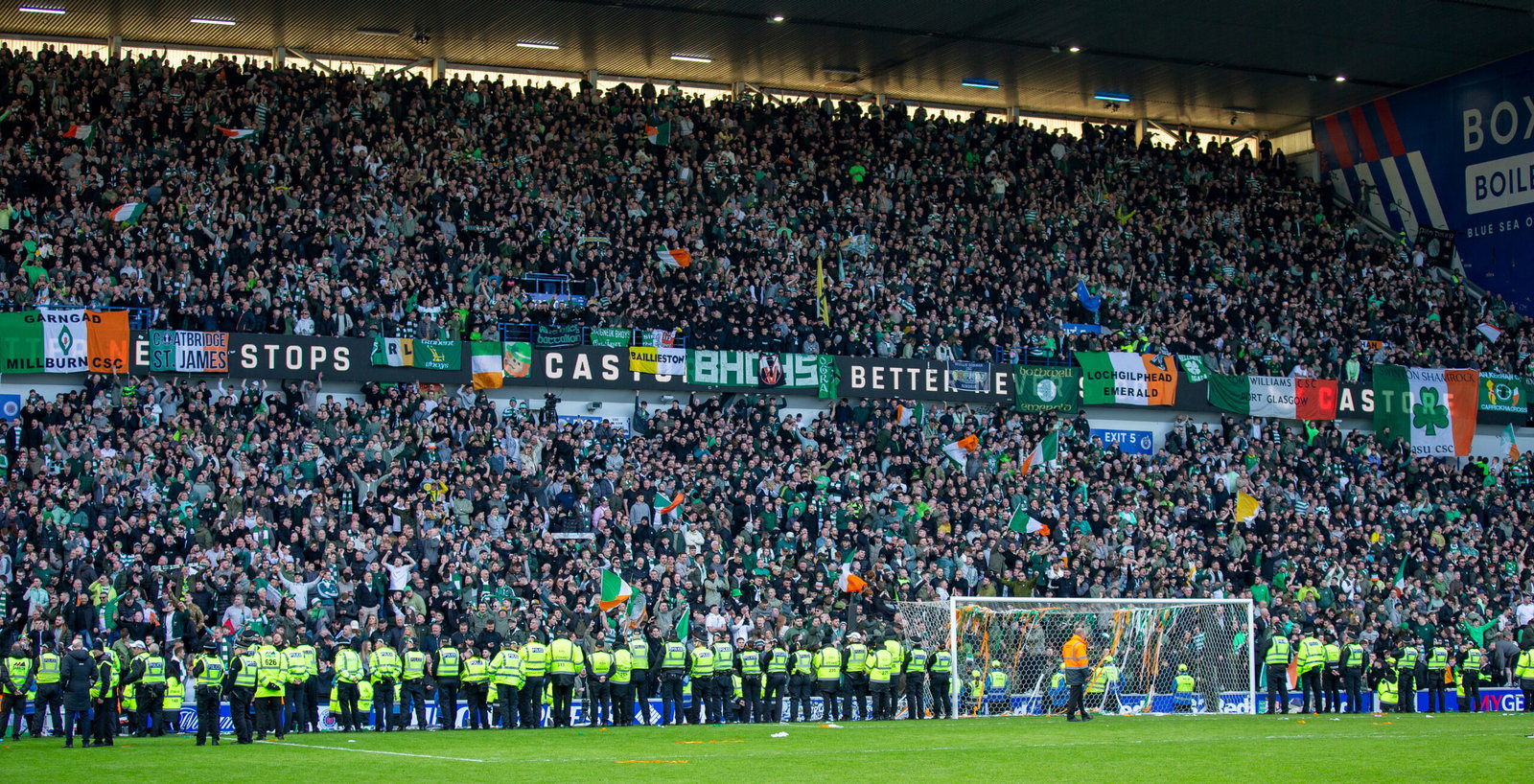
Celtic will visit Rangers in the Premier Sports Cup quarter-finals on Sunday 13 September, with the match kicking off at noon. The first Glasgow derby of the season is already unusual because no visiting supporters will be allowed inside Ibrox.
The SPFL introduced a temporary ban on away fans at league and League Cup meetings between the clubs during the 2026/27 season. The decision followed an independent review of serious disorder at their Scottish Cup tie in March.
With no Celtic supporters inside the stadium, more of the away audience will experience the occasion through television, supporter chats and other online distractions, including Megaways slot games, rather than the away end. For Martin O’Neill’s players, there will be no familiar pocket of noise behind the goal when they enter a hostile period of the match.
Why are Celtic supporters banned from Ibrox?
The current dispute follows events during Celtic’s Scottish Cup victory at Ibrox in March. Visiting supporters received a much larger allocation than they had in recent league derbies, but violent incidents occurred after the match.
An independent review examined the crowd disorder and the arrangements surrounding the fixture. The SPFL then held discussions with both clubs and Police Scotland about future supporter allocations.
Rangers proposed giving Celtic 300 tickets for the League Cup quarter-final. Celtic rejected that offer, arguing that such a small section would create safety concerns and do little to restore the traditional atmosphere.
The SPFL responded by removing away allocations for Old Firm matches during the remainder of the season. The arrangement can be reviewed if circumstances change, but it will apply to the cup tie at Ibrox and the league meeting at Celtic Park on 20 September.
Celtic will therefore play two consecutive derbies without their supporters present at the first fixture and without Rangers fans at the second.
How are Celtic performing before the derby?
Celtic enter the quarter-final with contrasting domestic and European experiences behind them.
Their Scottish Premiership form has been strong enough to establish a five-point lead. A recent 2-1 win at St Mirren showed the side’s ability to recover after falling behind.
Liam Scales conceded the penalty that allowed St Mirren to take the lead, but the defender responded by scoring Celtic’s equaliser shortly after half-time. Yang Hyun-jun then completed the comeback following good work by Camilo Durán.
The result gave Celtic another league victory without hiding the problems in their performance. St Mirren remained competitive and nearly equalised late in the game. Celtic controlled possession for long periods but did not always turn it into clear chances.
Their Champions League exit was much more damaging. Celtic appeared to be in complete control of their play-off against LASK after establishing a four-goal aggregate advantage. They then conceded five times and were eliminated 5-4 after extra time.
Dropping into the Europa League ensures that Celtic still have a substantial European programme. It does not remove the frustration of missing the Champions League, especially after reaching such a strong position in the tie.
A cup victory at Ibrox would help O’Neill move attention towards the competitions Celtic can still win.
How did Celtic reach the quarter-finals?
Celtic booked their place in the last eight with a 4-0 victory over Dundee United at Tannadice.
Auston Trusty, Durán, Sebastian Tounekti and Benjamin Nygren scored in a comfortable performance. Four different goalscorers reflected the number of attacking routes available to O’Neill when Celtic move the ball quickly.
The quarter-final should bear little resemblance to that match. Rangers are likely to defend more aggressively in central areas, while the Ibrox crowd will reward every tackle, interception and forward run.
Celtic beat Rangers 3-1 after extra time in last season’s Premier Sports Cup semi-final. Their more recent Scottish Cup meeting was settled by penalties. Those contests suggest another close match is more likely than a repeat of the four-goal win against Dundee United.
Cup football also leaves less room to recover after a poor spell. In a league match, a draw can remain a useful result. Sunday’s tie must produce a semi-finalist, with extra time and penalties available if the teams are level.
Could Celtic’s new players make the difference?
Several summer signings are still settling into the squad. Their response to Ibrox will be watched closely because a Glasgow derby carries a different intensity to most Scottish fixtures.
Mika Baur could experience the fixture for the first time. The 22-year-old midfielder joined after playing in Germany and scored his first Celtic goal during a 1-0 win over St Johnstone.
Baur has experience of passionate support through his time with Dynamo Dresden, but he has acknowledged that the Glasgow derby is unfamiliar territory. His job will be to keep his passing simple and avoid reacting emotionally to the atmosphere.
Oliver Sørensen arrived on loan after Celtic failed to sign Gvidas Gineitis. He provides another midfield option following Arne Engels’ move to West Ham.
The loss of Engels removed a player who could carry possession and contribute goals. Replacing those qualities may require several midfielders rather than one direct substitute.
Durán has already influenced matches through his energy and pressing. His work in the build-up to Yang’s winner against St Mirren demonstrated how he can create chances without taking the final shot himself.
O’Neill must decide how many new players are ready to start together. Selecting an experienced team could give Celtic greater control, while the younger arrivals offer pace and unpredictability.
Where could the match be decided?
Central midfield will be one of the most important areas. Celtic need enough control to prevent Rangers building momentum through repeated attacks, but they must also move possession quickly enough to threaten the home defence.
Callum McGregor’s positioning will be central to that balance. When Celtic’s full-backs advance, the captain often drops into a deeper area to receive the ball and protect against counter-attacks.
His passing can help Celtic escape pressure, although Rangers may assign a forward or attacking midfielder to restrict his space. If McGregor is forced backwards, Celtic’s build-up could become slower and more predictable.
The wide areas offer another possible route. Celtic can stretch Rangers by moving the ball quickly towards the wings, then attacking the penalty area before the defence resets.
Set pieces may become increasingly important if open play remains tense. Trusty and Scales provide aerial strength, while Rangers will also believe they can test Celtic through corners and free kicks.
Discipline matters in every derby. Challenges that seem routine in another fixture can produce a stronger reaction when the crowd and players are already emotionally involved. An early booking may prevent a defender or midfielder competing as aggressively for the rest of the match.
What comes after the cup tie?
Celtic have little time to recover after visiting Ibrox. Their Europa League campaign begins at home against Ferencváros on 17 September, only four days after the derby.
Rangers then travel to Celtic Park for a league meeting on 20 September. O’Neill must prepare for three demanding matches in eight days, with the second derby carrying points rather than cup progression.
Rotation will be necessary, but Sunday is unlikely to be the occasion for protecting several established players. Reaching the League Cup semi-finals gives Celtic an immediate route towards the first domestic trophy of the season.
The match will also influence the mood before the European opener and the second derby. Victory would place Rangers under additional pressure and help Celtic move beyond their Champions League disappointment.
Defeat would remove one possible trophy before the end of September. It would also give Rangers confidence ahead of their visit to Celtic Park.
The absence of visiting supporters will change the appearance and sound of Sunday’s match. It should not reduce its importance. Celtic must handle Ibrox without encouragement from the stands, win a knockout tie and prove that their domestic momentum can survive the most difficult fixture in Scottish football.
Keep Reading